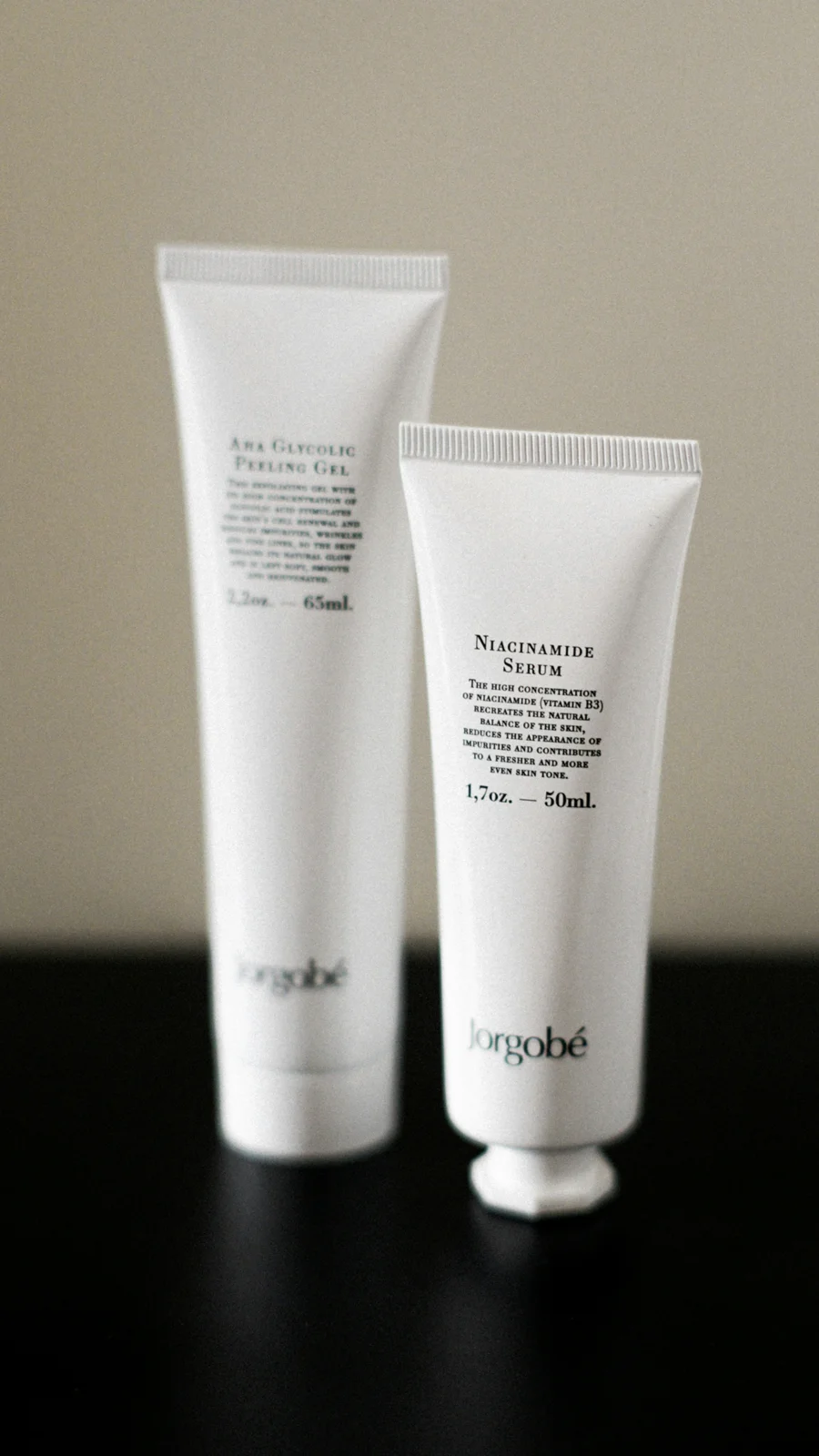
What Are AHA, BHA, and PHA?
AHA (alpha-hydroxy acids), BHA (beta-hydroxy acid), and PHA (polyhydroxy acids) are the three families of chemical exfoliants. Unlike physical scrubs, they chemically dissolve the bonds between dead skin cells at an acidic pH, enabling controlled desquamation without mechanical abrasion. Van Scott and Yu first documented the clinical potential of AHAs in the 1970s; more than three decades of subsequent research has clarified the mechanisms and safety profiles of all three families.
Molecular Structure and Depth of Action
The most fundamental differences between the three families lie in molecular weight and solubility.
| Family | Key Acids | Molecular Weight | Solubility | Depth of Action |
|---|---|---|---|---|
| AHA | Glycolic, Lactic, Mandelic | Small → Medium | Water-soluble | Upper epidermis |
| BHA | Salicylic acid | Medium | Lipid-soluble | Inside pores |
| PHA | Gluconolactone, Lactobionic | Large | Water-soluble | Outermost epidermis |
Glycolic acid has the smallest molecular weight among AHAs (76 Da), giving it the deepest epidermal penetration. Salicylic acid is the only lipid-soluble option, allowing it to penetrate pores filled with sebum. Gluconolactone stays near the skin surface due to its large molecular size, making it the gentlest of the three.
AHA (Alpha-Hydroxy Acids)
Mechanism of Action
AHAs work by weakening desmoglein bonds in the lower stratum corneum, reducing cohesion between corneocytes. According to Tang & Yang's 2018 review, AHAs produce dual effects:
- Immediate effect: pH reduction interferes with calcium ion activity in the stratum corneum → accelerated desquamation
- Long-term effect: Fibroblast stimulation → increased collagen and hyaluronic acid synthesis
Ditre et al. (1996) histologically confirmed a significant increase in dermal glycosaminoglycan (GAG) density in subjects using glycolic acid cream over 12 months — the first tissue-level evidence of AHA's anti-aging mechanism.
Key AHA Acids
Glycolic Acid
- Molecular weight: 76 Da (smallest AHA)
- Benefits: Strongest keratolytic action, melanin inhibition, dermal remodeling
- Typical concentration: 5–15% OTC; 20–70% professional peels
- Caution: Highest irritation and photosensitivity potential — SPF is mandatory
Lactic Acid
- Molecular weight: 90 Da
- Benefits: Exfoliation + boosts NMF (natural moisturizing factor) production → dual moisturizing effect
- Typical concentration: 5–12%
- Note: Gentler alternative to glycolic acid for dry or sensitive skin
Mandelic Acid
- Molecular weight: 152 Da (largest AHA)
- Benefits: Antimicrobial (acne-reducing) + brightening; slower penetration minimizes irritation
- Typical concentration: 5–10%
- Note: Lower risk of post-inflammatory hyperpigmentation in darker skin tones (Fitzpatrick IV–VI)
Clinical Evidence
Sharad's 2013 meta-analysis found that 20–70% glycolic acid peels produced statistically significant improvements across acne, pigmentation, and photoaging endpoints. Van Scott & Yu (1989) reported that AHAs thin the stratum corneum, improving absorption of subsequently applied moisturizers by over 60%.
BHA (Beta-Hydroxy Acid)
Mechanism of Action
Salicylic acid's defining property is its lipophilicity. Its structural affinity for sebum (lipid) allows it to penetrate into sebum-filled pores — dissolving plugs from the inside out. This is fundamentally different from AHAs, which act at the epidermal surface.
Salicylic acid also carries a significant anti-inflammatory benefit. As a cousin to aspirin (acetylsalicylic acid), it inhibits prostaglandin synthesis, reducing the redness and swelling associated with inflammatory acne lesions.
Per Arif's 2015 comprehensive review, salicylic acid's mechanisms include:
- Keratolysis: Disrupts lipid bonds between corneocytes
- Comedolysis: Clears plugged follicular openings (blackheads, whiteheads)
- Antimicrobial: Inhibits Cutibacterium acnes proliferation
- Anti-inflammatory: Suppresses the Cox-2 pathway
Concentration-Effect Relationship
| Concentration | Application | Effect |
|---|---|---|
| 0.5–2% | Toners, serums, moisturizers | Daily pore management, mild exfoliation |
| 3–5% | Spot treatments, professional products | Active acne treatment, keratosis |
| 10–30% | In-office chemical peels | Dermatologist-administered resurfacing |
Decker & Graber (2012) reported that 2% salicylic acid achieved equivalent reduction in acne lesion count compared to benzoyl peroxide, with significantly less skin dryness.
When BHA Is the Right Choice
- Oily, congestion-prone, large-pore skin
- Recurring blackheads and whiteheads
- Acne-prone skin (anti-inflammatory co-benefit)
- Body acne (back, chest)
PHA (Polyhydroxy Acids)
Mechanism of Action
PHAs have higher molecular weights than AHAs and carry multiple hydroxyl (-OH) groups. This structure produces three distinct advantages:
- Slow penetration rate → minimized irritation
- Multiple hydroxyl groups attract water → simultaneous exfoliation and hydration
- Metal ion chelation → neutralizes free radicals → antioxidant effect
Becker et al. (2012) conducted a thorough safety assessment showing that PHAs had significantly lower Irritation Index scores than AHAs in sensitive and atopic skin, and — crucially — were the only acid family that did not worsen transepidermal water loss (TEWL), a key marker of barrier function.
Key PHA Acids
Gluconolactone
- Exfoliation + potent antioxidant via metal chelation
- Safe for rosacea and reactive skin types
Lactobionic Acid
- Derived from milk sugar (lactose); exceptional humectant capacity
- Ideal for dry, aging, and atopic skin
Choosing Between AHA, BHA, and PHA
By Skin Type
| Skin Type | First Choice | Second Choice | Rationale |
|---|---|---|---|
| Oily / Acne-prone | BHA (salicylic) | AHA (glycolic) | Pore purification + anti-inflammation |
| Dry / Sensitive | PHA | Lactic acid (AHA) | Minimized irritation + hydration |
| Combination | BHA (T-zone) + AHA (U-zone) | — | Zone-targeted treatment |
| Hyperpigmentation / Photoaging | AHA (glycolic/lactic) | — | Epidermal renewal + dermal stimulation |
| Reactive / Atopic | PHA | — | Only acid that preserves barrier integrity |
Combinations to Avoid
- AHA/BHA + Retinol: Concurrent use causes excessive exfoliation and irritation → use in different routines (AM/PM)
- AHA/BHA + Vitamin C (L-ascorbic acid): pH conflict may reduce efficacy of both — layer them 20–30 minutes apart
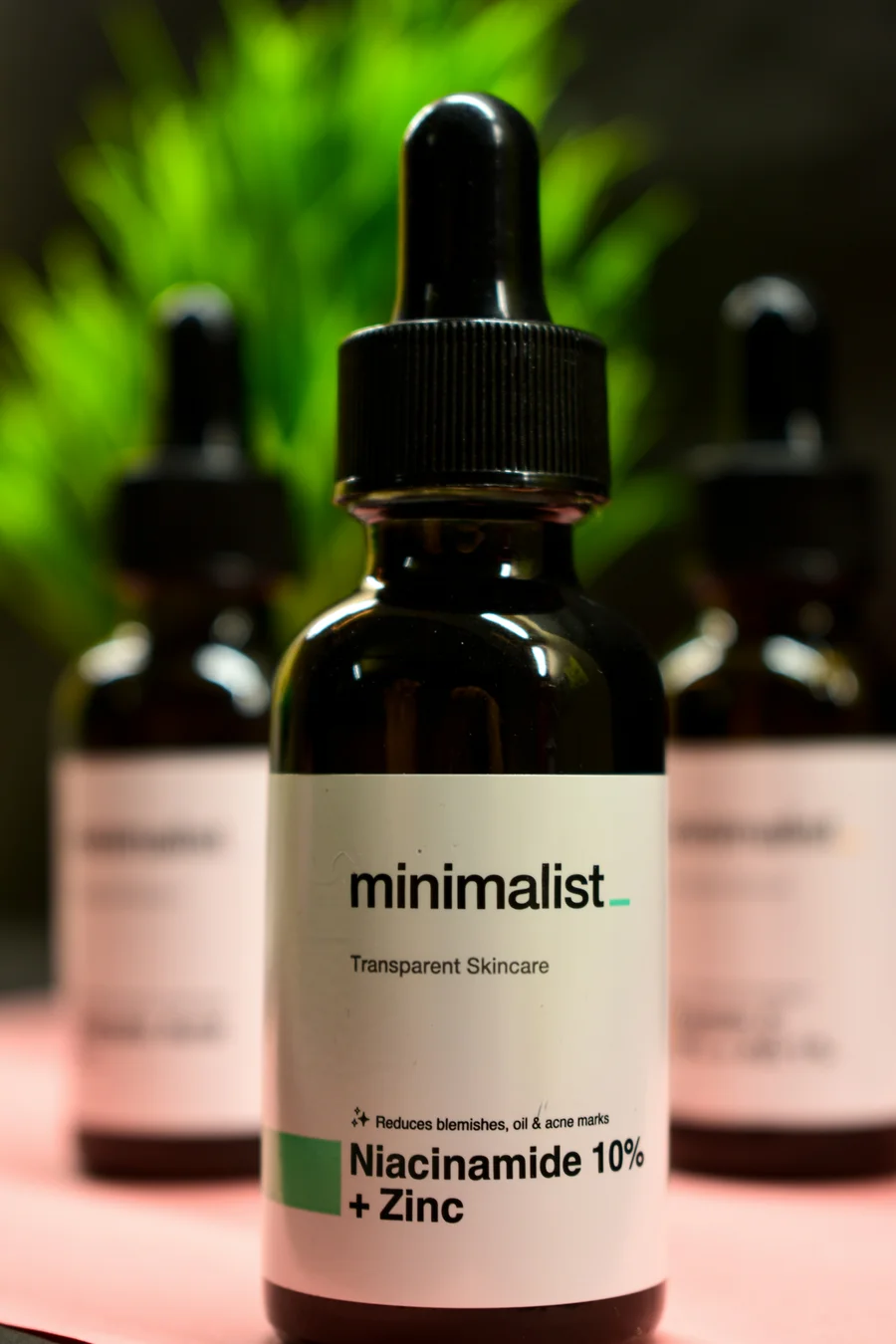
- AHA/BHA + Niacinamide: Niacinamide works optimally at near-neutral pH; high-strength AHAs applied simultaneously may reduce benefit — sequential application is preferred
Clinical Usage Protocol
Starting Out (Preventing Sensitization)
- Start low: AHA 5%, BHA 0.5–1%, PHA under 10%
- Begin with 1–2x/week → increase frequency after 4 weeks once tolerance is established
- Evening use only: AHA/BHA increase photosensitivity — SPF 30+ every morning is non-negotiable
- Check pH: Optimal efficacy requires product pH 3.0–4.0; above pH 5, keratolytic activity drops sharply
Safety Considerations
Green et al. (2009) recommend SPF 50 for at least 2 weeks after high-concentration AHA peels. Freshly exposed epidermal cells are substantially more vulnerable to UV-induced damage.
The FDA's OTC safety guideline for AHA products is a maximum concentration of 10%, at pH ≥ 3.5.
Multi-Acid Combination Products
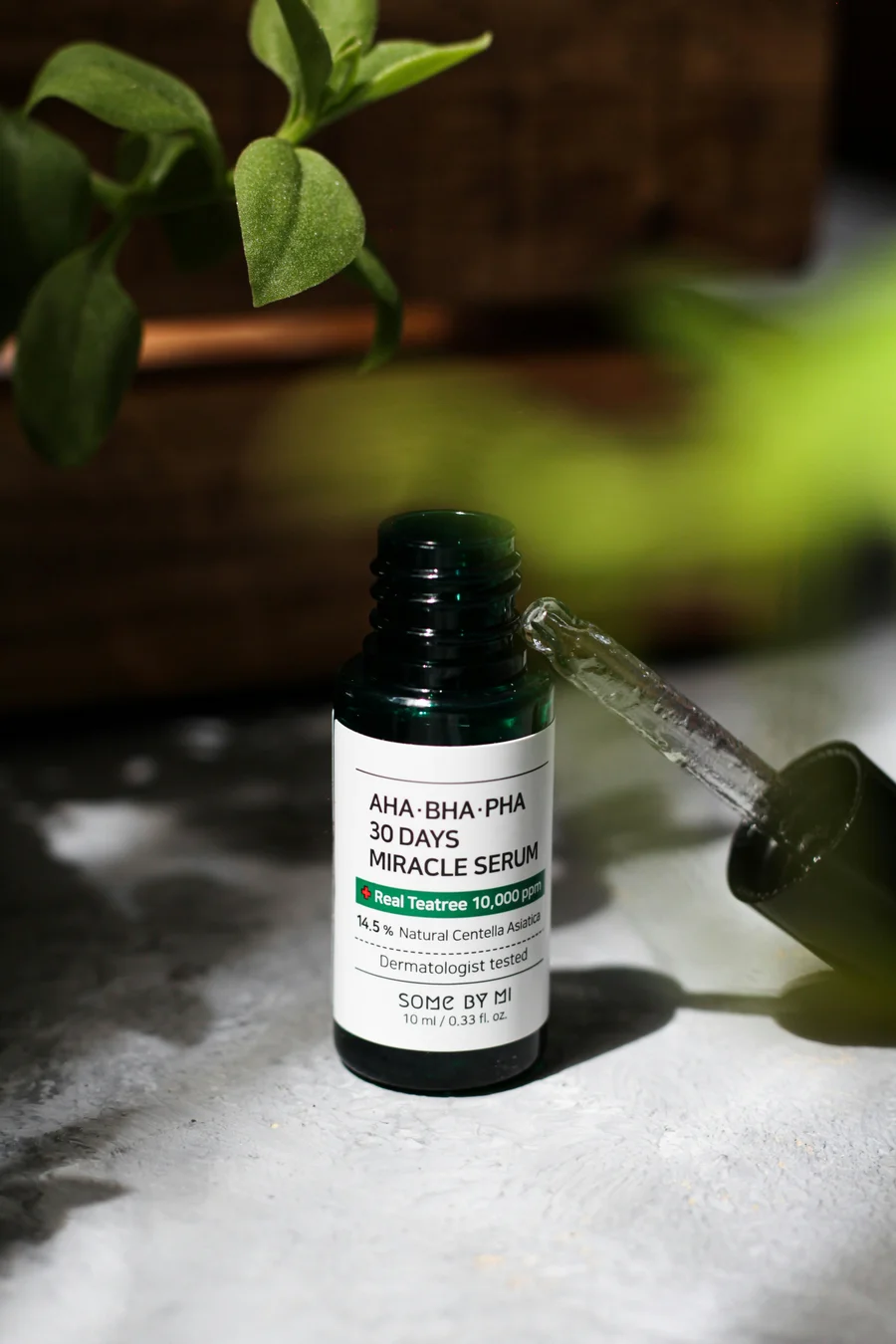
An increasing number of products now combine AHA+BHA or AHA+PHA. Kornhauser et al. (2010) reported that low-concentration multi-acid formulations achieve comparable exfoliation efficacy to single high-concentration acids, with significantly reduced irritation scores, provided the component acids share compatible pH requirements.
Summary
- AHA: Water-soluble, acts in upper epidermis — best for photoaging, pigmentation, and overall renewal
- BHA (salicylic acid): Lipid-soluble, penetrates inside pores — optimal for oily, acne-prone skin
- PHA: Large molecule, minimal penetration — safest option for sensitive, atopic, and acid-naive skin
- Universal rule: Sunscreen after any acid use is not optional — it's clinically mandatory
- pH is everything: A product must be pH 3.0–4.5 to deliver meaningful exfoliation
Shopping
추천 제품
※ 이 포스팅은 쿠팡 파트너스 활동의 일환으로, 이에 따른 일정액의 수수료를 제공받습니다.
References
- [1]
Kornhauser, A., Coelho, S.G., & Hearing, V.J. (2010). Applications of hydroxy acids: classification, mechanisms, and photoactivity. Clinical, Cosmetic and Investigational Dermatology, 3, 135-142.
- [2]
Tang, S.C., & Yang, J.H. (2018). Dual effects of alpha-hydroxy acids on the skin. Molecules, 23(4), 863.
- [3]
Arif, T. (2015). Salicylic acid as a peeling agent: a comprehensive review. Clinical, Cosmetic and Investigational Dermatology, 8, 455-461.
- [4]
Becker, L.C., et al. (2012). Final report of the safety assessment of polyhydroxy acids. International Journal of Toxicology, 31(4 Suppl), 96S-152S.
- [5]
Ditre, C.M., Griffin, T.D., Murphy, G.F., Sueki, H., Bhawan, J., Taylor, J.R., Rudolph, R.I., Balin, A.K., & Kligman, A.M. (1996). Effects of alpha-hydroxy acids on photoaged skin: a pilot clinical, histologic, and ultrastructural study. Journal of the American Academy of Dermatology, 34(2), 187-195.
- [6]
Green, B.A., Yu, R.J., & Van Scott, E.J. (2009). Clinical and cosmeceutical uses of hydroxyacids. Clinics in Dermatology, 27(5), 495-501.
- [7]
Brody, H.J. (1997). Chemical Peeling and Resurfacing (2nd ed.). Mosby.
- [8]
Sharad, J. (2013). Glycolic acid peel therapy: a current review. Clinical, Cosmetic and Investigational Dermatology, 6, 281-288.
- [9]
Decker, A., & Graber, E.M. (2012). Over-the-counter acne treatments: a review. Journal of Clinical and Aesthetic Dermatology, 5(5), 32-40.
- [10]
Van Scott, E.J., & Yu, R.J. (1989). Alpha hydroxy acids: procedures for use in clinical practice. Cutis, 43(3), 222-228.